
 Honda Accord: Shift Lock Release
This allows you to move the shift lever out of Park if the normal method of pushing on the brake pedal and pressing the release button does not work.
1. Set the parking brake.
2. Remove the key from the ignition switch.
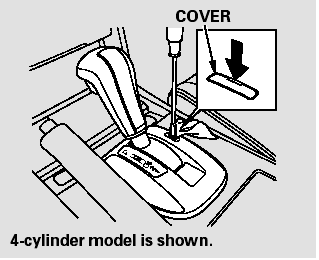
3. Put a cloth on the edge of the shift lock release slot cover to prevent scratches. Use a small flat-tip screwdriver or metal fingernail file to carefully pry up the edge of the cover and remove it from the slot.
4. Insert the key in the shift lock release slot.
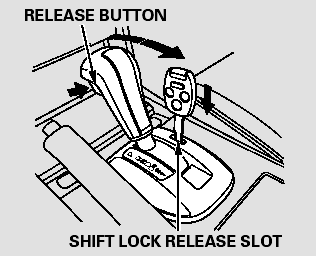
5. Push down on the key while you press the release button on the front of the shift lever and move the shift lever out of Park to neutral.
6. Remove the key from the shift lock release slot, then reinstall the cover. Make sure the notch on the cover is on the right side. Insert the key into the ignition switch, press the brake pedal, and restart the engine.
If you need to use the shift lock release, it means your vehicle is developing a problem. Have it checked by your dealer.
 Engine Speed Limiter
If you exceed the maximum speed
for the gear you are in, the engine
speed will enter into the tachometer’s
red zone. If this occurs, you may feel
the engine cut in and out. This is
caused ...

See also:
How to Use HFL
The ignition switch must be in the ACCESSORY (I) or ON (II) position.
To use HFL, you need to pair your
Bluetooth-compatible cell phone to
the system. ...
Rear License Plate Light Bulbs
The license plate has two lights
above it. The bulbs should be
replaced by your dealer. ...
Connecting Rod Bearing Replacement
Connecting Rod Bearing Clearance Inspection
1. Remove the oil pump (see page 8-17).
2. Remove the baffle plate (see step 8 on page 7-14).
3. Remove the connecting rod cap and the bearing half.
...